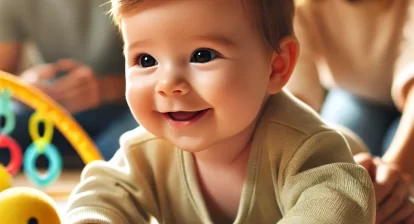
Many people assume babies are too young to understand emotions. But research and real life both say otherwise. From birth, babies absorb everything: the tone of your voice, the look in your eyes, the rhythm of your care. Every response you give, how you hold them, how you comfort them, how you speak when they cry, is a quiet lesson in empathy. It tells them something about what the world feels like. Is it gentle? Is it safe? Is it kind?
Those early experiences don’t just shape their mood; they shape how they’ll treat others. A baby who feels seen and comforted grows up understanding that others deserve that same gentleness.
The Everyday Lessons
Kindness isn’t taught through lectures or rules. It’s taught through tone, touch, and presence. When you respond to your baby’s cry instead of ignoring it, you’re teaching them that feelings are meant to be met, not silenced. When you smile back at their giggles, you’re teaching them connection. When you stay calm after a long night, you’re teaching patience without words.
Those little moments matter more than you think. Your daily interactions are shaping how your baby will view relationships, emotions, and people.
If you read a short story to your baby, show affection to your partner, or thank the woman who helps you around the house, your baby is watching. They may not understand the sentences, but they understand tone. They understand safety, and that’s how emotional intelligence begins.
Our Cultural Lens
In many African homes, we raise our children to be respectful. That’s a beautiful foundation, but sometimes, we stop there. Respect without empathy produces children who behave well but don’t always know how to care deeply. We can do both, we can teach our children to greet elders with respect and still ask if their friend is okay. We can show firmness without raising fear, and we can model gentleness without losing authority. The balance begins with us, in how we talk, how we correct, and how we treat people when we think our children aren’t watching.
Empathy grows in homes where love is consistent and correction is gentle. It grows in places where children feel safe enough to express emotions without being shamed. And it grows in mothers who are learning to extend that same grace to themselves.
A Gentle Word to You, Mum
It’s hard to model kindness when you’re tired, when the house is loud, when you haven’t had a full night’s sleep in months. I know, motherhood stretches you. It drains and fills you at the same time.
But remember this, your baby doesn’t need perfection, they need your presence, they need warmth, they need a mum who, even on her hardest days, still chooses love. Be kind to yourself. If you lose patience, apologise. If you’re exhausted, rest. If you’re feeling overwhelmed, ask for help. Your baby learns empathy not just from how you treat them, but from how you treat yourself.
That’s the quiet legacy you’re building, a child who grows up believing that kindness is normal, not special.
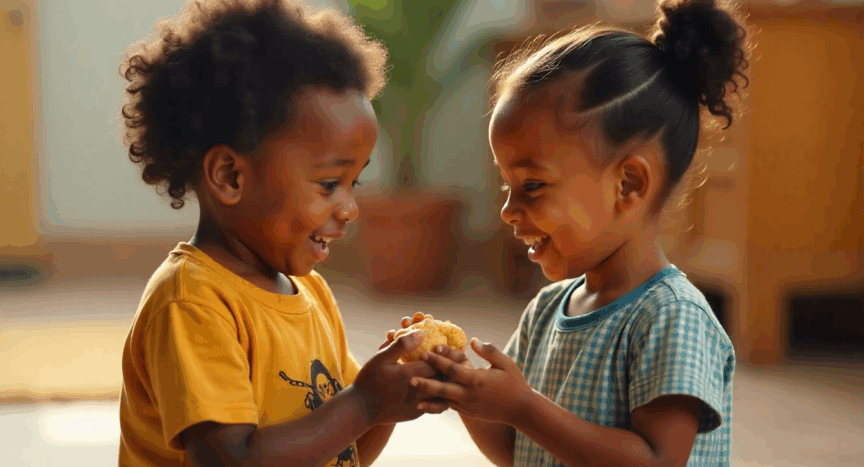
And one day, when you see your child offering their snack to a friend or patting another child’s back when they fall, you’ll realize: they learned that from you.
Listen to the Full Conversation
If this topic speaks to your heart, you’ll love the full episode of The 5 Star Mums Podcast on Spotify: “Teaching Your Baby Kindness and Empathy.” In the episode, we go deeper into practical ways to model empathy from infancy, how culture influences emotional growth, and how to nurture kindness without pressure.
Listen here on Spotify: 5 Star Mums Podcast: Teaching Your Baby Kindness and Empathy
“Don’t go through mumming alone.”
FK Jesuyode
Founder, 5StarMums