

After a baby arrives, most attention naturally goes to the child. People ask if the baby is eating well, sleeping well, and growing well. In the middle of all this, the mother is expected to adjust quickly, stay strong, and “get on with it.” But many women quietly struggle emotionally after childbirth, and what they need most at that time is not pressure, but understanding. If you are a father or partner reading this, your support during this period can make a real difference in your partner’s mental health and recovery.
What Postpartum Depression Really Is
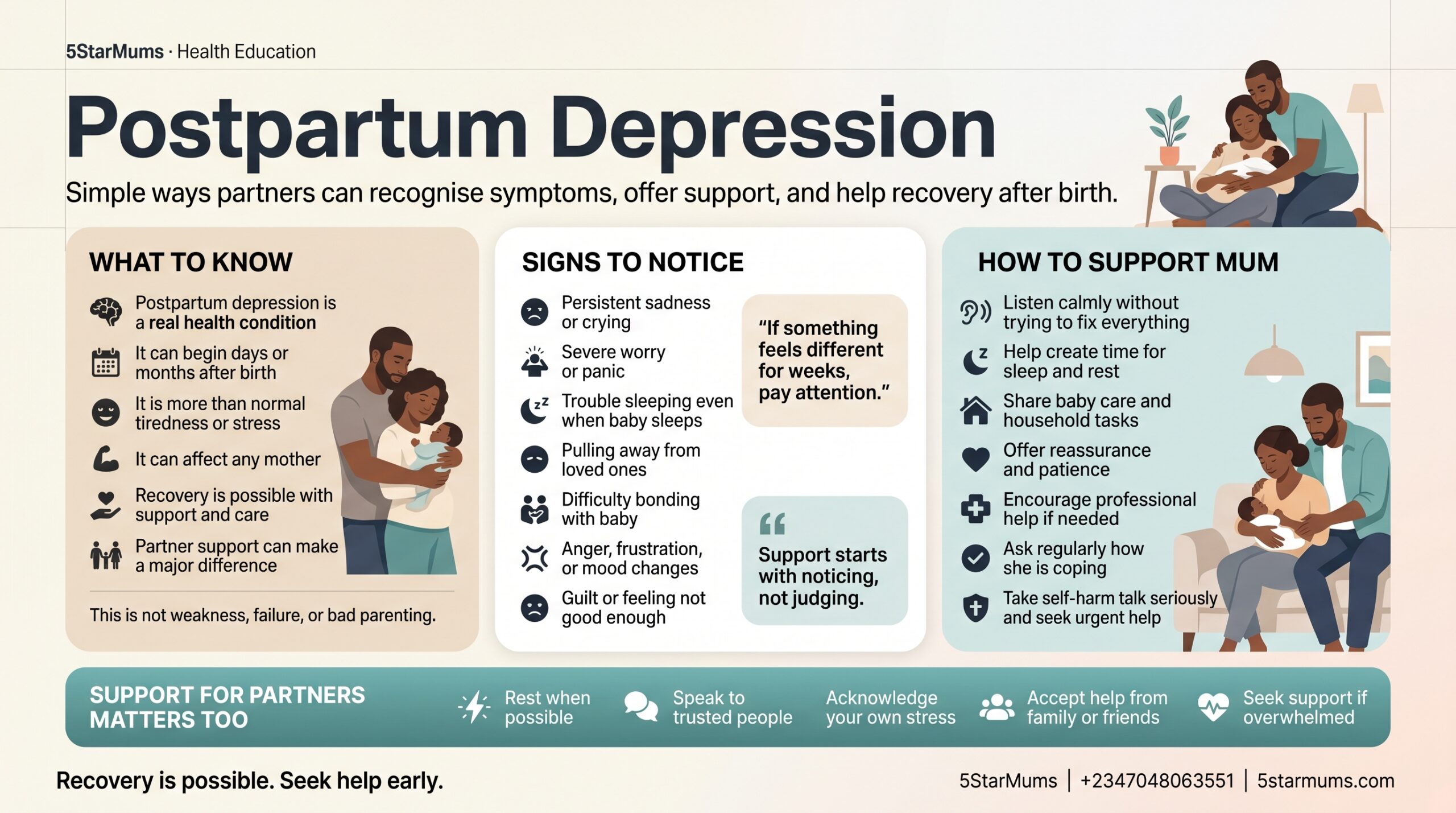
Postpartum depression is a mental and emotional health condition that can affect a mother after childbirth. It is not the same as normal tiredness or mood changes. It can last for weeks or months and can affect how a woman feels about herself, her baby, and her daily life. Some women feel constantly sad, others feel numb, and some feel overwhelmed or disconnected. It is important to understand that this is not something she is choosing or exaggerating. It is a real condition that needs care and support.
What You Might Notice as a Partner
As a partner, you may notice changes but not always understand what they mean. Your partner may seem withdrawn or less interested in things she used to enjoy. She may cry more often or become easily irritated. She may also appear exhausted even after resting, or say she feels like she is not a good mother. Sometimes she may struggle to bond with the baby in the way you expect. These signs are not about rejection of the baby or the relationship, but about emotional distress that needs attention.
Why Your Support Matters More Than You Think
During this period, your support is not just helpful, it is essential. Many new mothers feel alone even when people are around them. They may be physically cared for but emotionally unseen. When a partner listens without judgment, it creates safety. When a partner helps without waiting to be asked, it reduces pressure. When a partner acknowledges how difficult this stage is, it helps the mother feel less isolated. These small actions can have a big impact on recovery.
How to Respond When She Opens Up
If your partner tells you she is struggling, the first response matters. You do not need to fix everything immediately. What she needs most is to feel heard. Listen without interrupting or dismissing her feelings. Avoid saying things like “you will be fine” or “it is just stress,” because this can make her feel misunderstood. Instead, acknowledge what she is saying and let her know you are there for her. Sometimes the most powerful response is simply, “I hear you, and I am here.”
Practical Ways You Can Support Her
Support is not only emotional, but it is also practical. Helping with the baby, even in small ways like changing diapers, carrying the baby, or allowing her to rest, can ease her burden. Taking responsibility for certain household tasks can also give her space to recover. Encouraging her to eat, rest, and take breaks is important, especially when she forgets to care for herself. You can also help her create time for medical or mental health support if needed. These actions show care in a very real way.
What Not to Do
There are some responses that can make things worse, even if they come from a place of misunderstanding. Avoid dismissing her feelings or comparing her experience to others. Do not assume she is being dramatic or ungrateful. Do not expect her to “snap out of it” quickly. Also, avoid putting pressure on her to be the same as before childbirth. Recovery takes time, and pressure can slow it down instead of helping it.
Understanding the Emotional Shift After Birth
It is important to recognise that childbirth changes a woman’s life in many ways. Her body, her sleep pattern, her identity, and her daily routine all change at once. She may be trying to adjust to being a mother while also recovering physically and emotionally. This can feel overwhelming, even if everything looks fine on the outside. Understanding this shift helps you respond with more patience and empathy.
When to Encourage Professional Help
If her sadness, anxiety, or withdrawal continues for a long time or becomes more intense, it is important to encourage professional support. This is not about labelling her, but about helping her get better. You can gently suggest speaking to a doctor, therapist, or maternal health support service. You can also offer to go with her so she does not feel alone in the process. Seeking help early can make recovery easier.
The Role of Fathers in Healing
Fathers and partners play a key role in how a mother experiences this period. Your presence, patience, and understanding can help reduce her stress. You do not need to be perfect. You just need to be present and willing to learn. Being emotionally available, even in simple ways, helps build trust and safety during a very vulnerable time.
You Are Not Just a Bystander
This is not just her journey, it is a shared experience. How you respond can shape how she feels about herself, motherhood, and even your relationship during this stage. Your support can be the difference between her feeling alone and her feeling understood. If you are unsure where to start, begin by listening and showing up consistently. If you need guidance or a space to learn more about supporting new mothers, 5StarMums is here to help. You do not have to figure it all out on your own.
“Don’t go through mumming alone.”
FK Jesuyode
Founder, 5StarMums