

You know something is not right, but you do not know how to explain it. You are tired, overwhelmed, and not feeling like yourself, yet when your partner asks what is wrong, you either say “I am fine” or you keep quiet. Part of you wants support, but another part of you feels they will not understand. You may even worry about being judged or dismissed. If this is where you are, you are not alone. Many new mothers struggle to talk about postpartum depression, especially with the person closest to them.
Why It Is So Hard to Speak Up
Talking about how you feel after having a baby is not always easy. You may not even fully understand your own emotions, which makes it harder to explain them to someone else. There is also the fear of not being taken seriously. Some women have heard things like “you are just tired” or “it will pass,” and that can shut down the conversation before it even starts. In some relationships, there is also an expectation that the mother should be coping well, which makes it difficult to admit that you are struggling. All of this can make you keep everything inside, even when you need help the most.
What Your Partner Might Not Understand
It is important to realise that your partner may not fully understand what you are going through, not because they do not care, but because they are not experiencing it themselves. They may see the baby, the home, and daily life and assume everything is fine. They may not notice the emotional weight you are carrying or how much you are struggling internally. Some partners also feel pressure in their own way, especially financially or emotionally, and may not know how to respond when you open up. This gap in understanding is why clear communication matters.
How to Start the Conversation
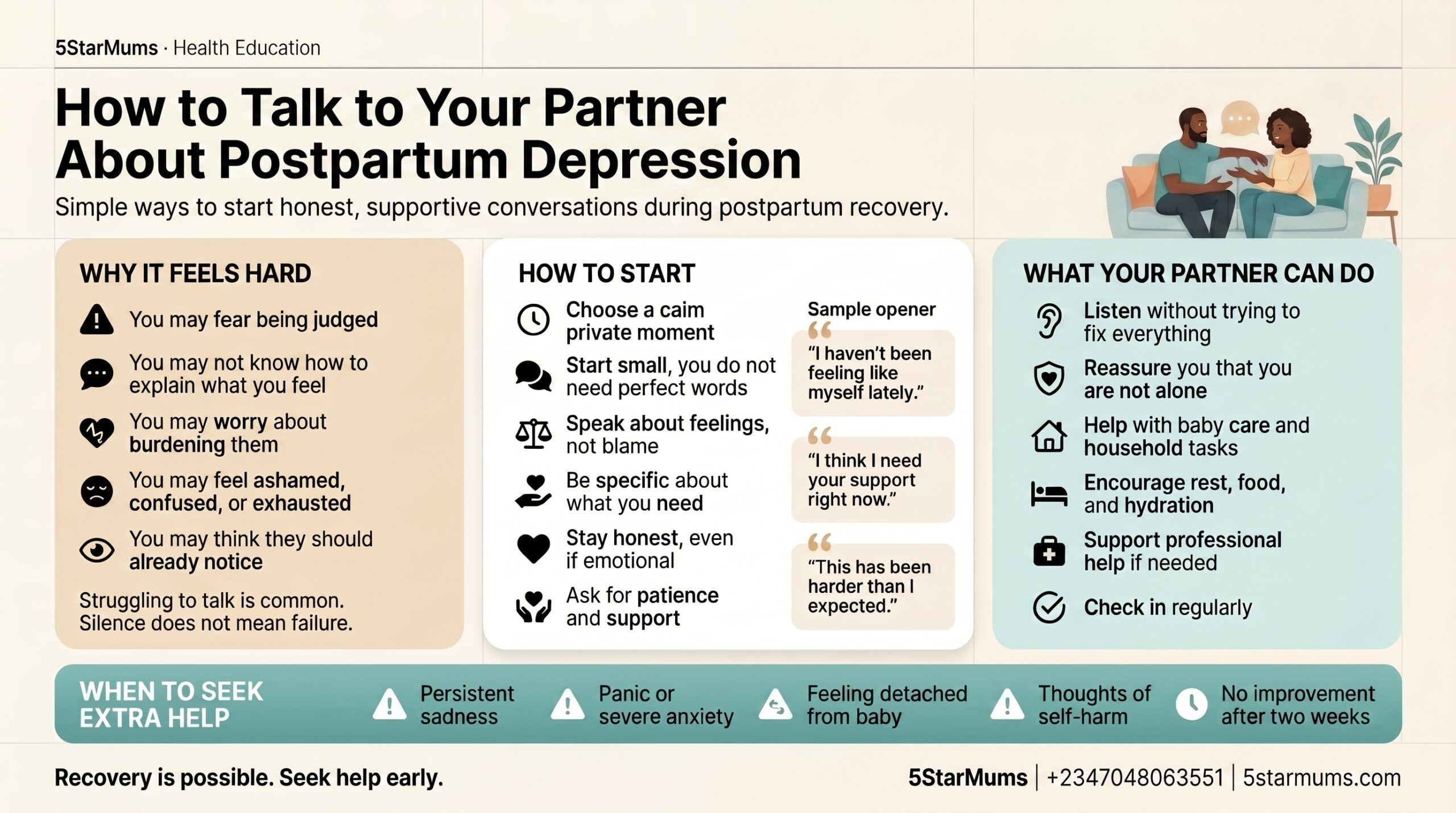
You do not need the perfect words to start. What matters is being honest. You can begin by choosing a calm moment when you are both not distracted. Instead of waiting until you are overwhelmed, try to speak when you feel a bit more settled. You can say something simple like, “I have not been feeling like myself lately, and I need to talk to you about it.” This makes it clear that the conversation is important. It also helps to focus on how you feel rather than what your partner is doing wrong. For example, saying “I feel overwhelmed and exhausted most days” is easier to receive than starting with blame.
What to Say When You Do Not Know What to Say
Sometimes the hardest part is finding the right words. If you are struggling to explain yourself, you can describe your experience in simple terms. You might say that you feel constantly tired, emotionally drained, or unable to cope. You can also explain specific moments, like how you feel during the day or at night. If talking feels too difficult, you can even write it down and share it with your partner. The goal is not to sound perfect, but to be understood.
What Kind of Support to Ask For
Your partner may want to help but not know how. This is why being clear about what you need can make a big difference. You might need help with the baby so you can rest, or you might need emotional support, like someone to listen without trying to fix everything. You may also need practical support around the house or simply reassurance that you are doing your best. Asking directly can feel uncomfortable, but it makes it easier for your partner to show up for you in the right way.
What If They Do Not Respond Well
Not every conversation will go as expected. If your partner dismisses your feelings or does not understand immediately, it does not mean the conversation is a failure. Sometimes people need time to process what they have heard. You can try again later or explain things in a different way. If you continue to feel unsupported, it is important to seek help outside the relationship, whether from a trusted friend, family member, or a professional. Your need for support is valid, regardless of how someone else responds.
When to Involve Professional Help
If your feelings are becoming overwhelming or affecting your daily life, it is important to involve a professional. You can suggest attending a session together so your partner can better understand what you are going through. This can also create a safe space for both of you to communicate openly. Seeking help is not a sign of weakness. It is a step towards getting better and protecting your well-being.
Common Misunderstandings in Relationships After Birth
Many misunderstandings can affect communication after childbirth. Some partners think that providing financial support is enough, while emotional support is just as important. Some mothers believe they have to handle everything on their own to prove they are strong. Others feel that asking for help makes them a burden. These beliefs can create distance and silence when what is really needed is openness and understanding.
You Deserve to Be Heard
You are not asking for too much by wanting to be supported. You are going through a major life change, and it is okay to need help. Speaking up may feel uncomfortable at first, but it is an important step towards feeling better and being understood. You deserve a partner who listens, tries to understand, and supports you through this phase. If you need a space where you can talk freely and feel less alone, 5StarMums is here for you. You do not have to carry everything by yourself.
“Don’t go through mumming alone.”
FK Jesuyode
Founder, 5StarMums