

The day is getting close, your maternity leave is ending, and you are expected to return to work. On the outside, it looks like a normal step, but inside, it feels like a lot. You may be thinking about your baby all the time and wondering how they will cope without you. At the same time, you are thinking about your job, your responsibilities, and the pressure to perform, as if nothing has changed. Part of you may even be looking forward to getting back to work, and then immediately feeling guilty for feeling that way. This mix of emotions is more common than people admit.
Why Returning to Work Feels So Difficult
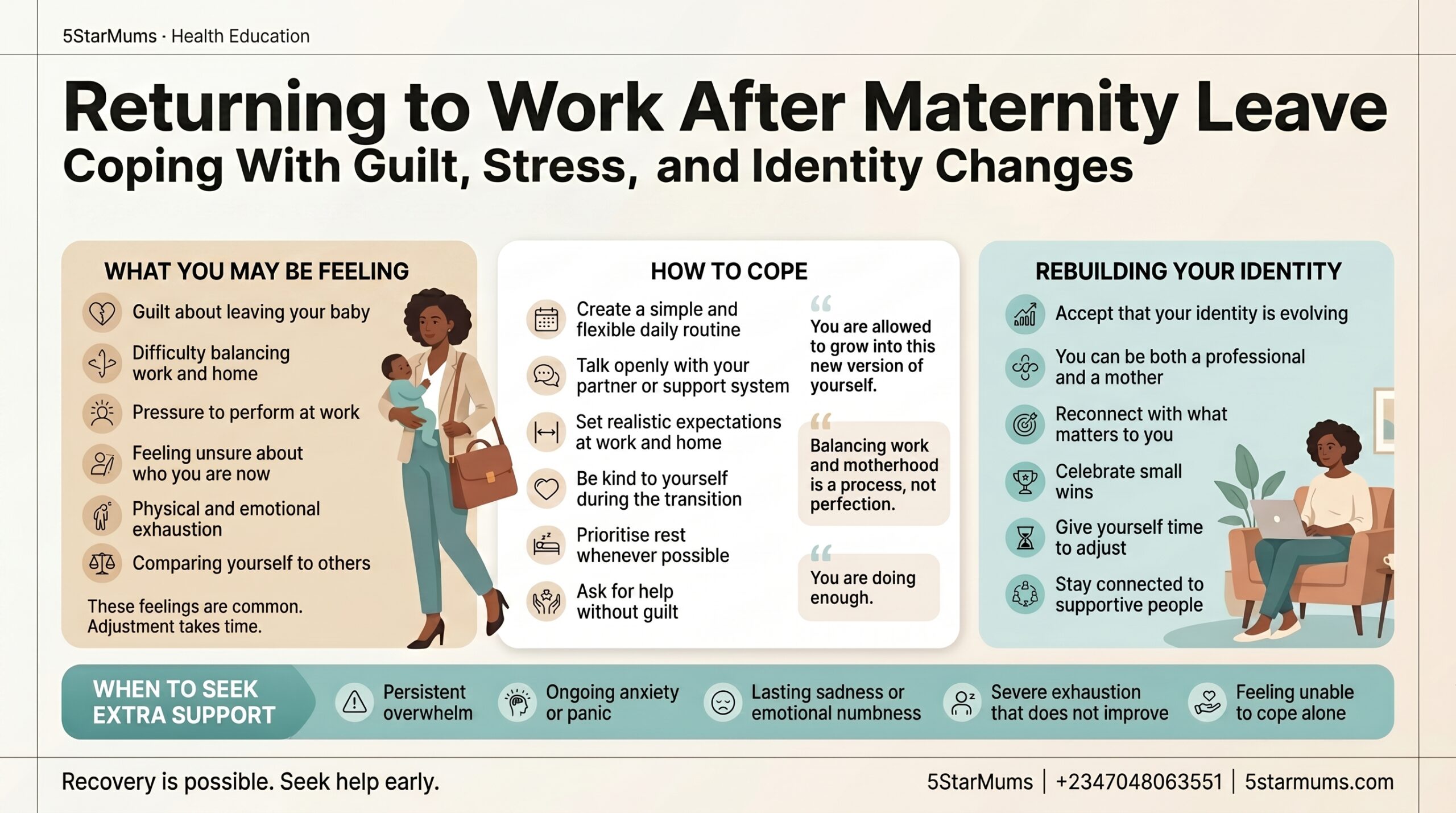
Going back to work after having a baby is not just about resuming your job. It is a major shift in your daily life and your identity. You are no longer just yourself. You are now a mother balancing work, home, and your own well-being. Physically, your body may still be recovering. Emotionally, you may still be adjusting. Mentally, you are carrying more responsibilities than before. In many Nigerian homes, there is also the expectation that you should handle both work and family without showing signs of stress. All of this can make the transition feel overwhelming.
The Guilt That Comes With It
One of the strongest emotions many mothers feel at this stage is guilt. You may feel guilty for leaving your baby at home. You may feel guilty for wanting time away from home. You may feel guilty if you cannot give your best at work immediately. It can feel like no matter what you do, you are falling short somewhere. This kind of guilt if it is not addressed, can affect your confidence and mental health.
The Stress of Trying to Do Everything
Returning to work often comes with the pressure to prove yourself again. You may feel like you need to show that you are still capable and committed. At the same time, you are adjusting to new routines like childcare, feeding schedules, and managing your home. Sleep may still be limited, and your energy may not be what it used to be. Trying to keep up with everything can leave you feeling constantly tired and stretched.
The Identity Shift No One Prepares You For
Before your baby, you had a certain rhythm and sense of self, now things feel different. You may find yourself questioning who you are outside of being a mother. You may miss your old routine, your freedom, or even the way you used to think and work. At the same time, you are growing into a new version of yourself. This transition can feel confusing, especially when you are expected to adjust quickly.
What Can Help You Cope Better
Even though this phase is challenging, there are ways to make it easier on yourself. It helps to ease back into work mentally by accepting that you may not perform at your previous level immediately, and that is okay. Setting realistic expectations for yourself can reduce pressure. Creating a simple routine for your mornings and evenings can also help you feel more in control. It is important to communicate with your employer if possible, especially if you need flexibility in the early weeks. At home, sharing responsibilities with your partner or family members can reduce the load on you. Most importantly, give yourself permission to feel what you feel without judging yourself.
Building a Support System
You cannot do this alone, and you are not supposed to. Having people you can rely on makes a big difference. This could be your partner, a trusted family member, a caregiver, or even other mothers who understand what you are going through. Emotional support is just as important as physical help. Being able to talk about your day, your struggles, and your wins can help you feel less alone.
When It Starts Affecting Your Mental Health
If the stress, guilt, or emotional weight begins to feel constant, it is important to pay attention. If you feel overwhelmed most days, find it hard to focus at work, or feel emotionally drained all the time, it may be more than just a normal adjustment. This is especially important if you have experienced postpartum depression or are still dealing with it. Seeking support early can help you manage this phase better.
Common Myths About Working Mothers
There are many beliefs that make this transition harder than it needs to be. Some people believe that a good mother should always be with her child, while others believe that going back to work means you care less about your baby. Both are not true. Being a working mother does not take away from your love or commitment. It simply means you are balancing different parts of your life. There is also the idea that you should handle everything without help, which is unrealistic and exhausting.
You Are Allowed to Take This One Step at a Time
You are adjusting to a new reality, and it will take time. Some days will feel easier than others, and that is normal. You are not failing because you feel stretched or unsure. You are learning how to manage a new phase of life. Give yourself space to grow into it. If you need a place where you can talk openly and get support from other women who understand, 5StarMums is here for you. You do not have to go through this alone.
“Don’t go through mumming alone.”
FK Jesuyode
Founder, 5StarMums