

You are trying to adjust to life after having a baby, but it feels like you are being watched and judged at the same time. Your mother-in-law may be around to help, or she may be checking in often, and while some of what she does comes from care, it can also feel overwhelming. You may hear comments like “in our time we were stronger” or “you just need to be happy, you have a baby now.” Meanwhile, you are struggling inside and do not even know how to explain it. Talking about postpartum depression in this situation can feel almost impossible, but it is something many women are quietly dealing with.
Why This Conversation Feels So Difficult
In many Nigerian homes, respect for elders is very important, and this can make open conversations hard. You may feel like speaking up means being disrespectful or ungrateful, especially if your mother-in-law is helping with the baby or the house. There is also a generational gap in how mental health is understood. What you are experiencing may be seen as something that should be ignored or pushed through. Because of this, many women stay silent, even when they are struggling.
Understanding Where She Is Coming From
It can help to remember that your mother-in-law’s reactions are often shaped by her own experiences. She may have gone through childbirth without support or without the language to describe how she felt. She may believe that endurance is the right way to handle difficult situations. This does not mean your experience is not valid, but it can explain why she may not understand you immediately. Seeing this can help you approach the conversation with more clarity instead of frustration.
Choosing the Right Time and Approach
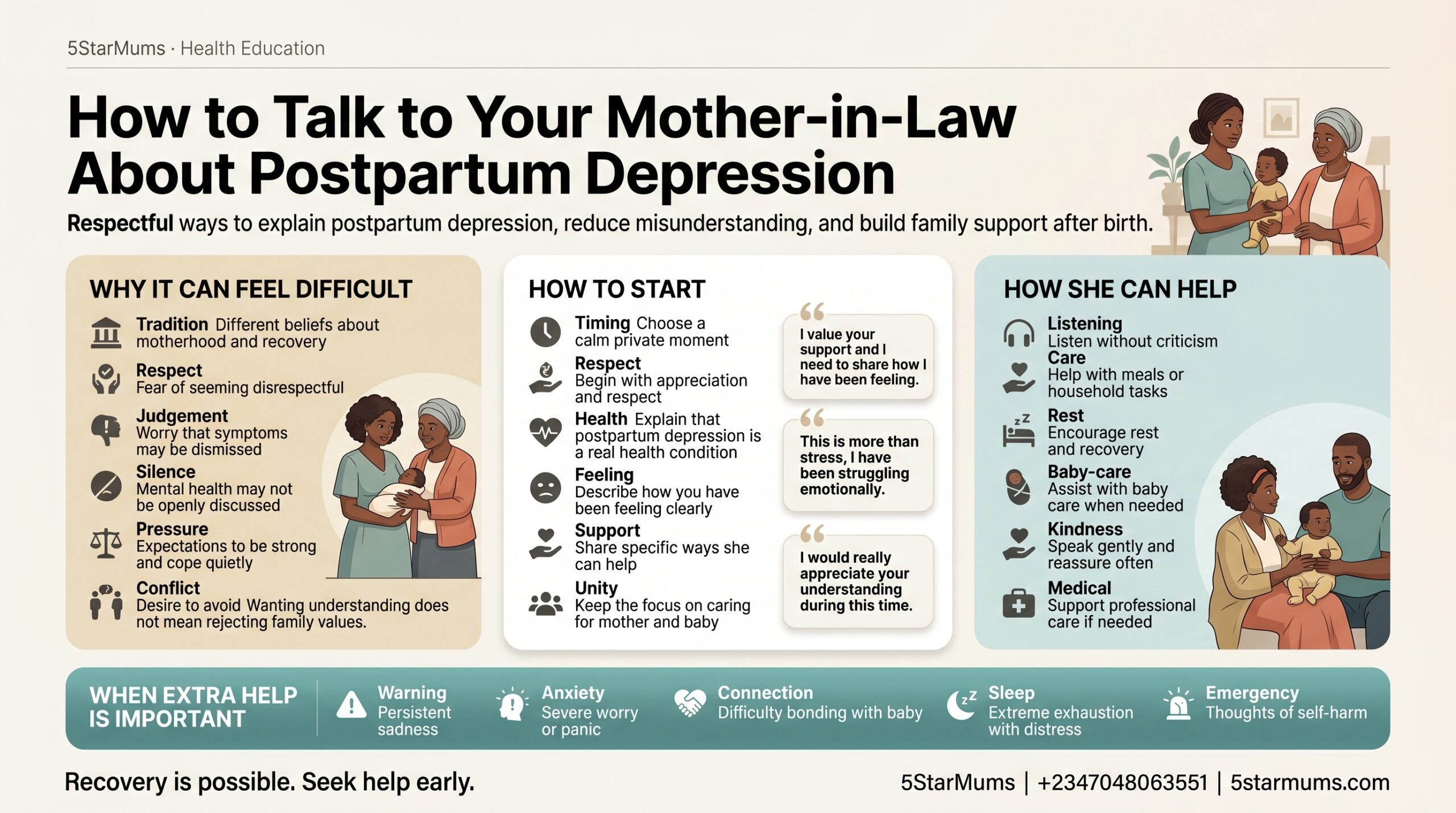
Timing matters when having this kind of conversation. It is better to speak when things are calm rather than during a moment of stress or disagreement. You do not need to start with a big explanation. You can begin with something simple and respectful, such as saying you have not been feeling like yourself since the baby arrived and you need some understanding and support. The way you say it matters just as much as what you say, so keeping your tone calm and respectful can help the message land better.
How to Explain What You Are Feeling
You do not need to use medical terms if they feel too heavy or confusing. You can explain your experience in everyday language. You might say that you feel constantly tired, overwhelmed, or emotionally drained. You can also describe how your mood has been changing or how difficult it has been to cope. Giving specific examples can make it easier for her to understand what you are going through. The goal is not to convince her immediately, but to help her see your reality.
Setting Gentle Boundaries
There may be moments when certain comments or actions make things harder for you. It is okay to set boundaries in a respectful way. For example, if certain remarks make you feel worse, you can calmly say that those comments are affecting you and you need a different kind of support. Boundaries are not about pushing her away, they are about protecting your wellbeing while still maintaining respect.
What If She Does Not Understand
Even after explaining yourself, she may not fully understand or accept what you are saying. This can be frustrating, but it does not mean your feelings are not valid. Sometimes people need time, and sometimes they may never fully get it. In that case, it becomes important to focus on getting support from other places. You can lean on your partner, friends, or a support community where you feel heard and understood.
Involving Your Partner
Your partner can play an important role in this situation. They understand both sides and can help bridge the gap. Talking to your partner about how you feel and what you need can make it easier for them to support you and communicate with their mother if needed. This can reduce tension and help create a more supportive environment for you.
When to Prioritise Your Wellbeing
There are times when protecting your mental health becomes the most important thing. If certain interactions are making you feel worse, it is okay to step back and create some space. This does not mean you are being disrespectful. It means you are taking care of yourself during a vulnerable period. Your wellbeing matters, and taking steps to protect it is necessary.
Common Myths in Family Settings
There are many beliefs that can make this situation harder. Some people think that having a baby should automatically make you happy all the time. Others believe that older generations know best in every situation, including mental health. There is also the idea that speaking up means you are being difficult or disrespectful. These beliefs can silence women who need support the most, which is why it is important to challenge them in a calm and respectful way.
You Can Respect Her and Still Speak Up
It is possible to honour your mother-in-law and still express what you are going through. Speaking up does not take away your respect for her. It shows that you are aware of your needs and willing to take care of yourself. You deserve to be supported, understood, and treated with care during this time. If you need a space where you can talk openly without fear of judgment, 5StarMums is here for you. You do not have to carry this alone.
“Don’t go through mumming alone.”
FK Jesuyode
Founder, 5StarMums